
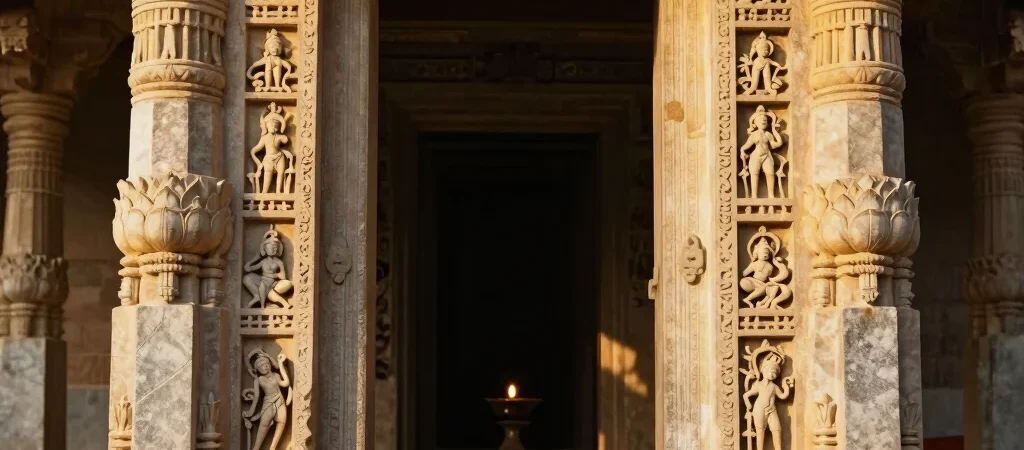
Stepping through the stone threshold of an ancient mandir offers an immediate sensation of sacred stillness and cosmic proportion. Indian temple architecture is not merely decorative stonework; it is a physical manifestation of sacred geometry designed to channel divine energy. Every carving, spire, and sanctum sanctorum follows precise Vedic principles meant to elevate the human spirit.
The Garbhagriha as the Cosmic Center
At the heart of every traditional temple rests the Garbhagriha, or inner sanctum, where the primary deity is consecrated. This windowless chamber concentrates spiritual vibration, allowing devotees to experience profound inner stillness during darshan. The transition from the brightly lit outer courtyards to this dim, candlelit sanctuary reflects the inner journey toward self-realization.
Sacred Geometry in Mandir Spires and Pillars
The rising vertical tower, known as the Shikhara or Vimana, symbolizes the sacred mountain connecting earth and the heavens. Detailed stone carvings depicting lotus petals, deities, and cosmic motifs remind visitors of the interconnectedness of all living beings. Walking along the circumambulatory path around the sanctum grounds the mind in quiet contemplation.
Preserving Living Traditions for Future Generations
Visiting these sacred sites with mindfulness helps preserve centuries-old temple rituals and regional devotional arts. Learning the spiritual history behind major pilgrimage destinations deepens our respect for the ancestral wisdom that built them. By documenting these sacred spaces with reverence, we ensure that coming generations remain connected to their rich dharmik heritage.